












Raymond van Eck
CEO
12 June 2026
4
min read
Share this article
Corporate distancing will not save children from the mines.
Child labor is not an exception but a feature of a consumer electronics industry obsessed with reducing costs to an absolute minimum. For decades, major tech brands have demanded cheaper components and higher margins every single year. They celebrate record profits while the true price of their devices is paid by the most vulnerable people on Earth. It is unfortunately the brutal reality.
Today is the World Day Against Child Labor. Across the entire tech sector, companies will send out tough statements and social media posts condemning the practice. Yet the recent 2025 report from the International Labor Organization and UNICEF reveals a terrifying truth: the world has officially missed its goal to eliminate child labor by 2025. There are still nearly 138 million children working worldwide, most of them in sub-Saharan Africa. If we want to know why we failed, we only need to look at our own supply chains.
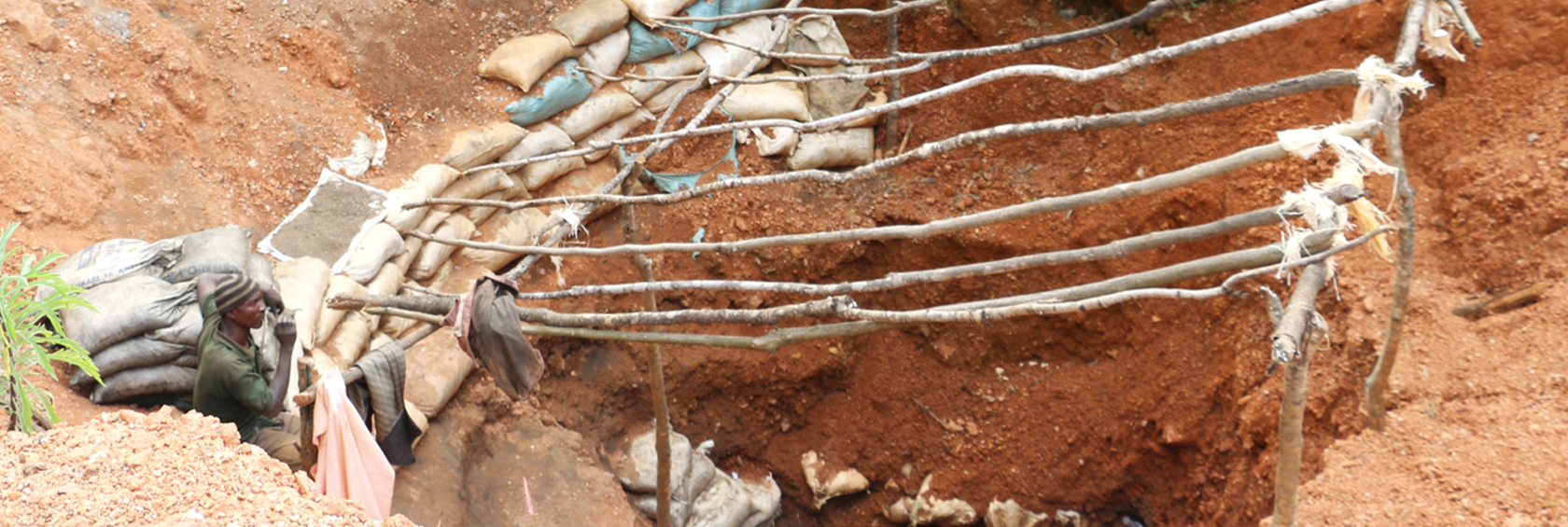
I recently returned from the Democratic Republic of Congo, where I saw the reality of artisanal cobalt mining with my own eyes. The DRC holds the vast majority of global cobalt reserves, and estimates suggest that tens of thousands of children work in the mines. The contrast between the beautiful smartphones we own and the red dust of the mines in Kolwezi is incredibly shocking. The work is hard, exhausting, and life-threatening. You see people, men and women, breaking the ground with basic tools to extract the minerals from the soil that power our digital world. But my biggest realization was not just the extreme hardship I saw. It was the realization that for countless families in the region, mining is their only economic means of survival.
When most major tech companies are confronted with the reality of child labor in places like Congo, their standard reaction is to hide behind paperwork. Child labor in their supply chain is even often denied. They point to corporate ethical codes of conduct and complex audit schemes. But anyone who has visited these regions knows that this is an illusion. Artisanal and industrial materials are often mixed at local trading houses before reaching a global smelter.
This strategy of corporate distancing will not save a single child. By officially banning the artisanal mining of cobalt on paper while turning a blind eye to how the supply chain actually functions, the industry simply drives these miners further into the shadows. It strips the miners of any sort of leverage, leaving them unprotected and at the mercy of an unregulated market.
"You cannot fix a rotten system by creating a paper reality that is only meant to protect your brand image."
At Fairphone, we choose transparency. We believe that if you make a profit from a material or mineral, you have a fundamental responsibility toward the people who pull it out of the ground. You cannot fix what you refuse to look at. Instead of banning artisanal materials, we work directly with these mining communities. Through our involvement with the Fair Cobalt Alliance, we invest in formalizing small-scale mines. We help create safer working conditions, ensure access to protective equipment, and, most importantly, work to ensure that adult miners receive a fair and stable living wage.
The solution to child labor is no mystery. It is not solved by corporate decrees from thousands of miles away. It is solved by basic economics. When adults earn enough to feed and support their families, their children do not have to work in the mines to make a living. They can go to school instead.
Our entire mission at Fairphone is to prove that this model is viable. We ruthlessly map our supply chains because full transparency is the only way to enforce real accountability. We demonstrate that it is possible to make fantastic consumer electronics without treating the people at the source as disposable commodities. Let us be honest: Fairphone is not perfect. The truth is that 100% honesty in a deeply rotten global economy is an ongoing journey. It is not a static destination, but we are fully committed to pushing the boundaries of what is possible.
We cannot wish child labor away. We cannot solve it with publicity campaigns. If the tech industry truly wants to eradicate this practice, it must fundamentally change how it values human labor. The tech industry must accept that ethical sourcing costs money and requires you to commit to solving the problem instead of ignoring it. Abandoning the most vulnerable communities is the easy way out. It is time for the tech industry to take responsibility and do the real work.
Latest stories
Corporate distancing will not save children from the mines.
Child labor is not an exception but a feature of a consumer electronics industry obsessed with reducing costs to an
Read more
Is buying refurbished better than new?
Let’s get right down to it. The simplest argument for choosing a refurbished device over a brand new one will
Read more
Everybody loves Fairphone. See what we mean.
Fairphone has grown leaps and bounds in the last decade, nearing one million users across the world. Our smartphones have
Read more